Ask someone who lives in Oak Park where they grab coffee, and they will point you toward a stretch of East Eighth Street that technically sits at the neighborhood's edge. Ask where they run or bike, and they will send you along Railroad Avenue, following a trail that only clips the edge of Oak Park before continuing on to somewhere else entirely. Ask about the beach, and the answer involves crossing Front Street to get to sand that belongs, in the strictest sense, to a different park district.
None of this is a complaint. It is just how the neighborhood works, and it is worth saying plainly because most write-ups of Oak Park skip right past it. They describe a quiet, tree-lined pocket south of downtown Traverse City, list off the usual walkability and family-friendly language, and move on. What they miss is the actual shape of daily life here: a neighborhood whose real infrastructure, the food, the trail, the water, sits just past its own boundary lines, borrowed rather than built in.
What's Actually Inside the Line
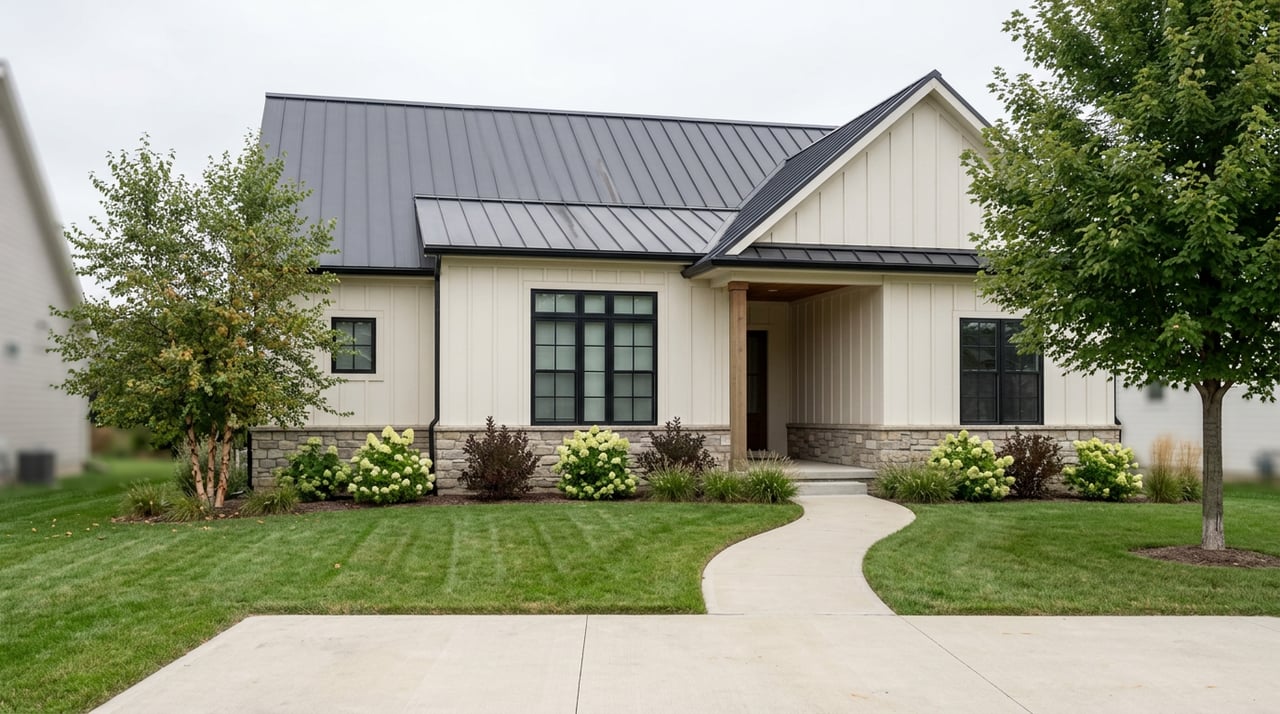
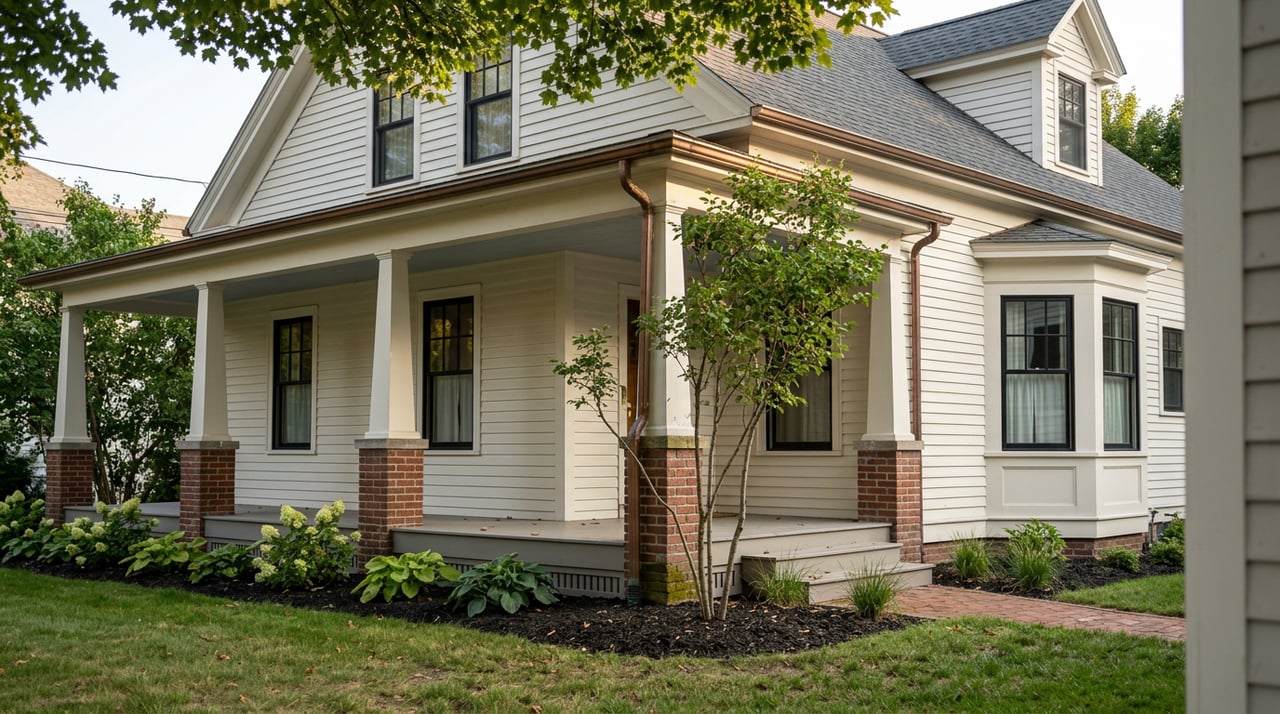
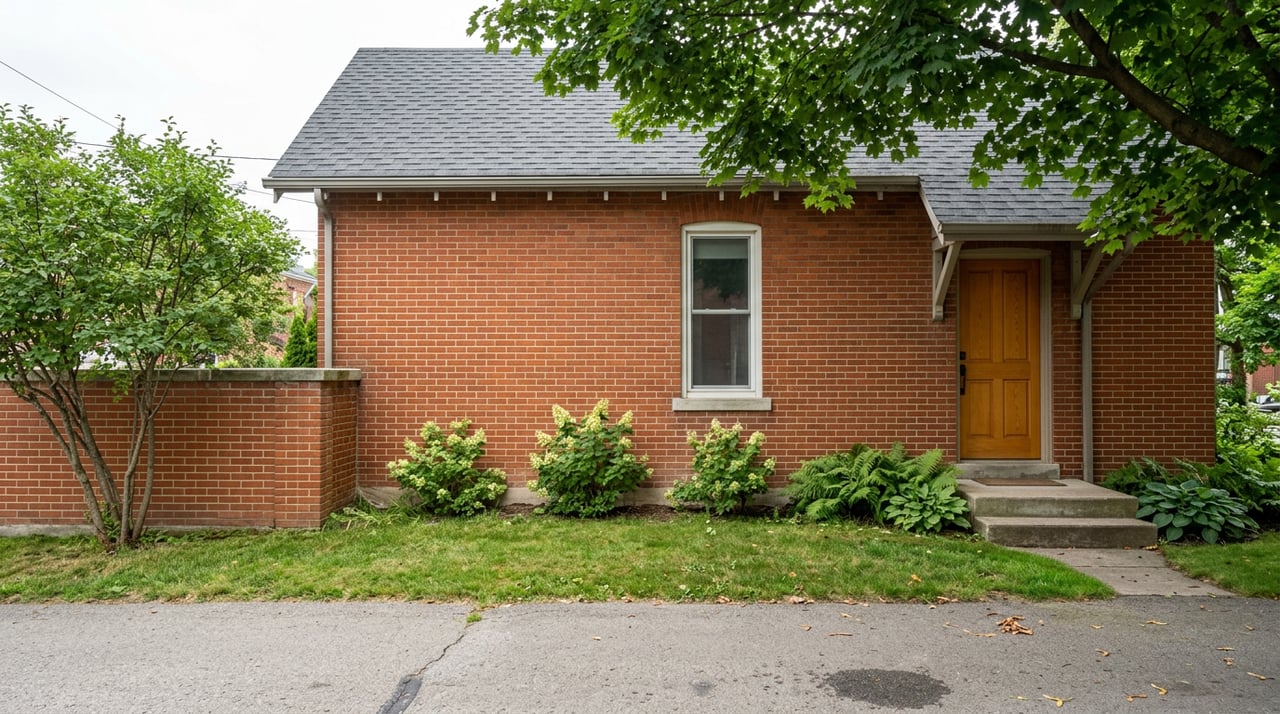
Oak Park itself, the physical park the neighborhood is named for, is a modest patch of ground on Oak Park Drive. Mature trees, a handful of picnic tables, a simple playground. It is the kind of small green space that anchors a subdivision without trying to be a destination, and that is more or less the pattern for the whole neighborhood. The streets are residential, the lots are settled, and there is no commercial strip inside the boundary itself, no corner store, no diner with its own address inside the neighborhood's lines.
That absence is easy to read as a gap. It is more accurate to read it as a design choice that happened by proximity rather than planning. Oak Park sits close enough to downtown, and close enough to a handful of other neighborhoods' commercial edges, that it never needed its own. The homes.com neighborhood data for the area groups Oak Park alongside Old Town, Central, Boardman, and Traverse Heights as the cluster of neighborhoods people search together, and that clustering is not an accident of the algorithm. It reflects how residents actually move: out of Oak Park's quiet streets and into whichever adjacent corridor has what they need that day.
The Corridor That Isn't Officially Oak Park's
The clearest example runs along East Eighth Street, a half-mile stretch that residents treat as their own even though it sits along the neighborhood's border rather than inside it. The businesses on this run are not new, and they are not interchangeable chain storefronts. They have been there long enough to become part of how the neighborhood tells time.
Start with Potter's Bakery at 908 East Eighth Street. The bakery has been operating since 1929, when Norman and Julia Potter opened the first location downtown. Ownership passed from Norman to his son Jerry, then to Jerry's son Mike and his wife Kathy in 1984, and finally to their daughter Becky and her husband Bill in January 2024, four generations in the same family without the business ever changing streets. The handoff is a couple of years behind the neighborhood now, but it is still the most recent chapter in a run that says something about how these small, family-run businesses tend to survive here: quietly, through succession, rather than through reinvention.
A few blocks down, at 545 East Eighth Street, sits Raduno, a deli that shows up on every local list of the corridor's dining anchors. Further along at 1108 East Eighth, Oakwood Proper Burgers holds down the other end of the stretch. Round's Restaurant sits in between, rounding out what locals describe as their default answer to "where should we eat" without ever having to leave the immediate area.
The corridor, in short, includes:
- Potter's Bakery (908 E Eighth St) — family-owned since 1929, now run by its fourth generation
- Raduno (545 E Eighth St) — the deli stop most residents default to for lunch
- Round's Restaurant — the third stop along the same run
- Oakwood Proper Burgers (1108 E Eighth St) — the anchor at the far end of the stretch
None of these addresses sit deep in Oak Park's residential blocks. All of them function, for practical purposes, as Oak Park's kitchen.
The Trail at the Edge
The same pattern holds for how residents move through and out of the neighborhood on foot or by bike. The TART Trail, the region's non-motorized path system, runs along Railroad Avenue through Oak Park, giving residents a car-free route into downtown Traverse City and beyond. But Railroad Avenue is not a street that sits in the middle of the neighborhood's residential grid. It is the kind of corridor street that tends to define an edge rather than a center, the same way rail lines and the roads that follow them usually do.
That distinction matters more than it might seem. A trail that serves the whole city, rather than one built exclusively for a single subdivision, is a shared resource before it is a neighborhood amenity. Oak Park's walkability, frequently cited in neighborhood guides, is real, but it is a walkability built on a route that exists for Traverse City generally and simply happens to run past this particular neighborhood's back door.
Two Beaches, Neither One Yours Alone
Cross East Front Street from Oak Park and the neighborhood's third borrowed amenity comes into view: beach access on both sides, Bryant Beach Park to the east and Sunset Park Beach to the west. Both sit close enough to reach on foot, both give Oak Park residents legitimate claim to Grand Traverse Bay as part of their everyday geography, and neither one is technically Oak Park's. They belong to the broader city park system, shared with whichever other neighborhood happens to sit on the opposite side of that same crossing.
This is the same pattern as the trail and the same pattern as Eighth Street, repeated a third time until it stops looking like coincidence. Oak Park is bordered on multiple sides by amenities that exist for the whole city, not carved out for one neighborhood's exclusive use, and residents have simply adopted the closest ones as their own.
Why the Borrowing Works
Put the three pieces together, the food corridor, the trail, the beach access, and a clearer picture forms than the generic "quiet and walkable" description usually offers. Oak Park works not because it has everything inside its own boundary, but because it sits at the intersection of several other places' amenities without needing to compete with any of them for identity. The neighborhood's own park stays small because it does not need to be anything more than a quiet spot on Oak Park Drive. The commercial energy lives a few blocks over, on a street that also serves neighboring areas. The trail and the water belong to the whole city, and Oak Park just happens to be close enough to use them constantly.
The Oak Park Neighborhood Association, led by president Vicki Armour, exists in part to hold this loose arrangement together, coordinating the kind of community upkeep and cohesion that a neighborhood without its own commercial gravity still needs. It is a sign that residents take the identity of the place seriously even when its physical assets sit just past the property lines that define it on a map.
For anyone who has lived in Oak Park for a while, none of this will come as news. It is simply the geography of the place, absorbed through years of walking to Potter's for a Saturday morning pastry or crossing Front Street for an evening at Sunset Park Beach. But it is worth naming outright, because it explains something the standard neighborhood write-ups never quite capture: Oak Park is not a place defined by what sits inside it. It is defined by how well it borrows from everything around it, and by how little that borrowing seems to cost the character of the neighborhood itself.
If you are curious about what else that borrowing extends to, or about how a neighborhood like this one fits into the wider Traverse City housing picture, the team at The Mitten Group knows this stretch of the city block by block. Reach out any time you want a local read on a place before you make a decision about it.